Red Routes, Bay Suspensions and ULEZ: What Access Actually Costs a Window Cleaning Round in Central London

The bill for cleaning forty windows on a Marylebone High Street office is mostly not about the windows. It is about a van, a kerb, and roughly eleven separate ways the city has of taking money off a vehicle that stops moving. I run rounds from Bishopsgate out to Eltham High Street, and the labour rate barely differs between them. Everything else does.

What Does a Red Route Do to a Morning Round?

Red routes are the TfL Road Network – the arterial corridors, something like five per cent of London’s roads carrying about a third of its traffic. Double red lines mean no stopping at any time, for anyone, including a van with a tank in the back and a job forty feet away. Single red lines mean no stopping during the hours on the sign, which in central London is usually most of the day you’d want to work.

Enforcement is camera-led and unforgiving. TfL’s penalty on the red route network sits at £160, halved to £80 if you pay inside fourteen days, and there is no warden to reason with because the ticket arrives in the post from a camera that saw you at 09:14 on Commercial Road. You will not talk your way out of it. Loading exemptions exist in marked bays and at marked kerb chevrons, and they are useful, but the exemption covers continuous loading and unloading – not a vehicle standing empty while its driver is on the fourth floor of a building with a squeegee.

That distinction is the whole thing. Window cleaning is not loading. You unload for four minutes and then work for ninety, and for eighty-six of those minutes your van is parked, legally speaking, wherever it happens to be.

The loading bay that solves half the problem

Shared-use and loading bays off the red route are where a central round lives or dies. Bays on borough roads a street back from the main corridor often permit up to twenty or thirty minutes for loading, longer if they’re pay-by-phone shared use, and the working method that follows is: park legal, walk the kit in on a trolley, return to move the van, walk back. Two extra trips per job, five to ten minutes each.

Nobody pays you for that. It is not in the quote, and it happens four or five times a day on a central round.

When Do You Need a Bay Suspension, and What Does the Borough Charge?

The moment you need the vehicle itself parked directly at the building – a tank van feeding a pole at eighteen metres, or anything involving a MEWP – you are into suspensions and dispensations rather than parking.

Every borough runs its own scheme and prices it differently. Expect a per-bay, per-day charge in the tens of pounds, an administration fee on top, and a lead time that is rarely under five working days and can be ten in Westminster or Kensington and Chelsea during busy periods. Suspend three consecutive bays on a residential street in SW1 for a two-day access job and you have a real line item, and it has to be booked before you’ve confirmed the weather, which means you sometimes pay for a suspension on a day the wind stops you working at height.

If the work needs a cherry picker on the footway rather than in the carriageway, add a separate highways licence from the borough plus evidence of insurance at whatever level they specify, and a traffic management plan for anything that narrows a pedestrian route. A 12-metre spider lift is £250 to £400 a day before the operator, and the operator needs an IPAF card and somebody trained as a rescue attendant standing at the base. That is two men on site to clean windows one man could reach if only the van could stop.

Dispensations are the cheaper cousin: permission to park where you otherwise couldn’t, for a defined period, without the bay being physically coned and signed. Where a borough will grant one, take it.

The signs have to go up, and somebody has to check them

A suspension is only enforceable if the yellow corex notices went out with the required notice period on them. If they didn’t, or if a resident pulled them off overnight, you arrive to find a Volvo in your bay and the borough telling you to ring the removals contractor. I’ve lost two hours on Bermondsey Street to exactly that. The habit worth building is a drive-past the evening before, or a photograph from somebody local.

Is ULEZ Still a Real Cost for a Water-Fed Pole Van?

For most operators, no, and this is where the conversation usually gets lazy. ULEZ covers all London boroughs now at £12.50 a day for non-compliant vehicles, but the standard is Euro 6 for diesel, which every van sold since around September 2016 meets. If you are running a 2019 Transit or a 2021 Vivaro, you pay nothing and you have paid nothing for years.

Where it bites is the old vehicle you kept because it was paid for. A 2014 diesel tipper or a second van used twice a week for gutter work is £12.50 every day it turns a wheel anywhere inside the M25, and £12.50 twice weekly is £1,300 a year for a vehicle that earns maybe eight grand.

The weight line nobody thinks about until they cross it

Pure water is one kilogram a litre. A 650-litre tank filled to the top is 650kg before you count the pole rack, the RO unit, the ladders and a passenger, and a 3.5-tonne van with a payload around 1,100kg gets uncomfortable fast. Cross 3.5 tonnes gross and you are into a different licence category for anyone who passed their test after 1997, different tachograph and MOT considerations, and the Low Emission Zone standards that sit above ULEZ for heavier vehicles.

The practical answer is to run tanks part-filled and refill from a client’s outside tap where you can get one, which in central London you frequently can’t, because the building is an office with no external tap and a facilities manager who wants a risk assessment before you touch a standpipe.

How Much Is the Congestion Charge Costing Per Window?

Since 2 January 2026 the Congestion Charge is £18 a day, up from £15, and the old blanket exemption for electric vehicles has gone – electric vans now get a 50 per cent discount if they’re registered on Auto Pay, so £9 rather than nothing. The zone runs Monday to Friday from 07:00 to 18:00, and from noon to 18:00 at weekends and on bank holidays.

Eighteen pounds sounds trivial against a day’s turnover until you divide it properly. If the zone accounts for two days of your week, that’s £36, plus ULEZ if you’re on an older vehicle, plus whatever the kerb cost you. On a small residential job in Fitzrovia billed at £45, the daily charge is a meaningful share of the gross before anyone has touched a squeegee, and it does not scale down for small jobs. The charge is the same for the van that does one flat as for the van that does eleven offices.

Why the round starts at half past five

The charge begins at 07:00 on weekdays. Red route single-line restrictions typically start at 07:00 or 08:00. Pay-by-phone bays in most central zones don’t begin charging until 08:30 or 09:00.

So there is a window, roughly 05:30 to 07:45, where central London is nearly free to a vehicle and nearly empty of one. Ground-floor and lower-elevation work gets done in it, then the van comes out of the zone before the meter starts, and the rest of the day runs on foot or from a bay a street back. Every established central operator I know works some version of this. It costs you a 04:45 alarm and a first hour of the day in the dark for four months of the year.

Nobody pays you for that either, and it is the single biggest reason central work is a different trade from suburban work rather than the same trade with worse parking.

Should Central Work Be Priced Differently From the Rest of the Round?

It should be priced on a different basis altogether, and here is the opinion I’ll defend: any firm quoting per-window in W1 or EC2 is either subsidising that work from its outer-London round or has not sat down with a calculator. Per-window pricing assumes access is free and time on site is the only variable. In the zone, access is the variable and the windows are almost incidental.

What works is an hourly rate for time on site plus a stated access charge covering the vehicle, so the client can see what they’re paying for. Clients in central London accept this more readily than contractors expect, because every other trade they deal with already prices this way. A plumber attending a flat off Wilton Road does not pretend the parking was free.

The access charge also gives you somewhere honest to put the abort. Bay suspended and coned, van loaded, wind gusting to 25 miles an hour by nine o’clock, and the pole work is off for the day. Somebody has already paid the borough.

Density is the only thing that fixes the arithmetic

The reason a round in Eltham or Blackheath Village can be profitable at a third of the central rate is that the van moves eighty metres between jobs and parks free. Central rounds only work when they’re dense enough that one paid stop covers three or four buildings within a two-minute walk, which is why serious central operators refuse scattered single jobs and turn away work that would look fine on paper.

If you’re a managing agent with buildings in EC2 and you’re using three different firms, put them out to one contractor as a block and ask for the access charge to be shared across the buildings. It’s a smaller invoice for the same work, and it takes money off somebody like me. It also means the man in the van isn’t quietly making up the difference by rushing your second floor.

Fabricating Debris and Scraper Damage: Who Pays When a Shopfront’s Toughened Glass Scratches During Cleaning

A scratch on a 3.6-metre toughened shopfront pane is not a small argument. Replacing one on Chiswick High Road means a made-to-measure unit, a glazier with vacuum lifters, a pavement licence from Hounslow, and probably a night shift because you’re not closing that footway at two in the afternoon. Four figures before anybody discusses who caused it. And the answer to who caused it is usually more interesting than either party wants it to be, because in a large share of these cases the scratch was built into the glass months before the cleaner arrived.

What Is Fabricating Debris, and Why Does It Surface on Cleaning Day?

Toughened glass is made by running annealed float through a furnace at around 620°C and then quenching it fast with air, which puts the surface into compression and the core into tension. That’s what makes it strong and what makes it break into cubes rather than daggers.

Inside the furnace the glass rides on ceramic rollers. Those rollers pick up debris – fragments of glass from previous breakages, plus whatever else a production line running all day sheds onto its own rollers – and when a softened sheet passes over a contaminated roller, particles get pressed into the underside surface. They fuse there. The glass cools with tiny hard specks sitting proud of, or partly embedded in, the tin-side face.

You cannot see them. Not from the pavement, not with a torch, usually not at all until something moves across the surface with pressure behind it. Then the particle detaches and travels, and it takes a curved score with it. That arc shape is the signature: a fine crescent, often several of them, running in the direction of the stroke. A blade scratch from a nicked corner is straight and continuous. Debris damage curves.

Fabricating debris is a known and long-recognised issue in glass manufacture, and it is not evenly distributed. Some processors have it under control. Some furnaces are worse in some months than others, and a single shopfront installation can have four clean panes and one that grates under the blade like wet sand.

Ten seconds to work out what you’re looking at

Corner stamps first – toughened glass carries a permanent mark, usually bottom corner, giving the processor and standard. Then step back and look for roller wave, the faint horizontal ripple in the reflection that tempering leaves behind. Polarised sunglasses will show you the quench pattern, a leopard-spot or stripe effect in the reflected light that annealed glass never has. Three seconds each. Write it down before you unfold the ladder.

Does the Scraper Cause the Scratch, or Find It?

Both trade positions on this are defensible, which is why it ends up in dispute.

The physics is settled enough. A tungsten or carbon steel blade is softer than the glass surface it rides on, which is why a clean blade on clean toughened glass leaves nothing behind even after thousands of strokes – the trade has been scraping paint and mortar off shop windows since before float glass existed. Introduce a fused ceramic particle sitting proud of that surface and you have changed the tool. You are no longer drawing steel across glass, you are drawing a small hard point across glass under whatever pressure your forearm is applying.

The North American window cleaning and glass industry bodies reached a broadly settled view years ago: scraping is an accepted method of removing bonded soiling from glass, and where debris is present the resulting damage is a defect of manufacture rather than negligence by the cleaner. UK guidance from the glazing side has historically been more cautious about metal blades on any glass surface, which gives a shopfitter or a glass processor a comfortable position to argue from.

So the technical question and the contractual question separate. Technically, a correctly used blade on debris-free toughened glass does not scratch it. A correctly used blade on contaminated glass will. Contractually, if the specification you signed says no metal scrapers and you used one, none of the physics helps you.

What a defensible scrape looks like

New blade for each shopfront, minimum. Glass wet with solution at all times and never a dry pass. Blade held flat, around five to ten degrees, pushed in one direction rather than dragged back and forth, and lifted clear at the end of each stroke instead of pivoting on a corner. Test patch first, low down in a corner where the sign vinyl covers it, and if you hear or feel that gritty resistance you stop there and photograph the pane.

I stopped a job on Northcote Road once at the third pane and rang the client from the pavement. It cost me the day. It also meant that when the tenant later found scoring on two other elevations, cleaned by somebody else, nobody was looking at me.

Who Ends Up Paying?

Whoever has the worse evidence.

I mean that as a description of how these disputes resolve in practice. Liability nominally turns on cause, but cause is nearly impossible to establish six weeks after the fact when three trades have been on site. What it turns on in reality is whether anyone can show the state of the glass before the cleaning happened, and whether the cleaner can demonstrate they worked to a recognised method.

The strongest position I’ve seen a contractor hold was on a Kingston retail unit where the cleaner had photographed all eleven panes at handover, timestamped, including two with existing scoring near the door furniture. When the debris damage appeared on pane seven, the conversation lasted one email. The glass processor replaced the unit under a fabrication claim. Nobody argued about the cleaning contract at all, because the cleaning contract was never the weak link.

The condition survey nobody does

Twelve photographs and four minutes on the first visit. Every elevation, raking light where you can get it, close on any existing damage, and a note of anything that feels wrong under a test blade. Send it to the client the same day so it sits in their inbox with a date on it.

Almost no window cleaning firm in London does this on retail work, and every single one of them will do it after the first time they eat a £2,800 pane. Write it down.

Why Won’t Your Public Liability Policy Cover It?

Here is the part that catches out competent operators, and it is worth more attention than the rest of the article combined.

Standard public liability cover responds to injury or damage caused to third parties. Nearly every policy carries an exclusion for property in the insured’s care, custody and control – meaning the actual thing you were working on. You drop a squeegee through a display cabinet, you’re covered. You scratch the pane you were sent to clean, the insurer looks at that exclusion and declines.

What you need is an extension variously called treatment risk, damage to goods worked upon, or a care, custody and control write-back, and it is not automatic. It carries its own limit, often far below the main indemnity, and often with a separate excess. Half the cleaning firms operating on commercial contracts in Greater London are carrying £5 million of public liability and £5,000 of the cover that would respond to a glass claim.

Then read the exclusions inside the extension. Several insurers exclude damage arising from the use of abrasives or bladed tools, which is a neat way of removing the only risk you bought the extension for. Others require you to demonstrate compliance with manufacturer cleaning guidance, which pulls the whole GGF-versus-North-American argument back into play at the worst possible moment.

The question to put to your broker in writing

Ask them directly: does this policy respond to a scratch caused by a scraper during routine cleaning of toughened glass, and if so, to what limit. Get the answer by email. A broker who gives you a confident verbal yes and a vague policy schedule is not the person who will be handling the claim.

What Should Go in the Contract Before Anyone Touches the Glass?

Four things, and none of them are unusual asks in a commercial cleaning agreement.

A clause recording that bonded contamination will be removed by blade unless the client specifies otherwise in writing. A clause stating that damage arising from fabrication defects in the glass is not the contractor’s liability. An agreed pre-works condition record forming part of the contract documents. And a notification window – damage reported within seven days or not at all, because after that the site has had other people on it.

That last one gets pushback and it should. Seven days is short. It is also the only version that means anything, because a claim raised in November about a September clean is unprovable in either direction.

The builders’ clean problem, which is a different animal

Most shopfront glass damage in London does not come from routine maintenance cleans at all. It comes from the post-installation clean, where the glass has cement splash, silicone smears, protective film adhesive and mortar runoff on it, and somebody is being paid a fixed price to get it off before handover on a Friday. Alkaline runoff from fresh concrete etches glass permanently within days – that is chemical damage, invisible until the surface dries out, and impossible to polish back. It gets blamed on whoever cleaned last.

If you are fitting out a unit on the King’s Road, the builders’ clean is where your money is at risk, and it belongs in the main works contract with the glazier’s warranty attached to it. Not in a cleaning contract signed afterwards for £340 a month.

I’d tell any facilities manager reading this to price the condition survey into the cleaning tender and pay for it separately, because a cleaner who is doing it unpaid will stop doing it by month four. Sixty pounds a year buys the documentation that decides a four-thousand-pound argument. The glass on that Kingston unit is still in, six years on.

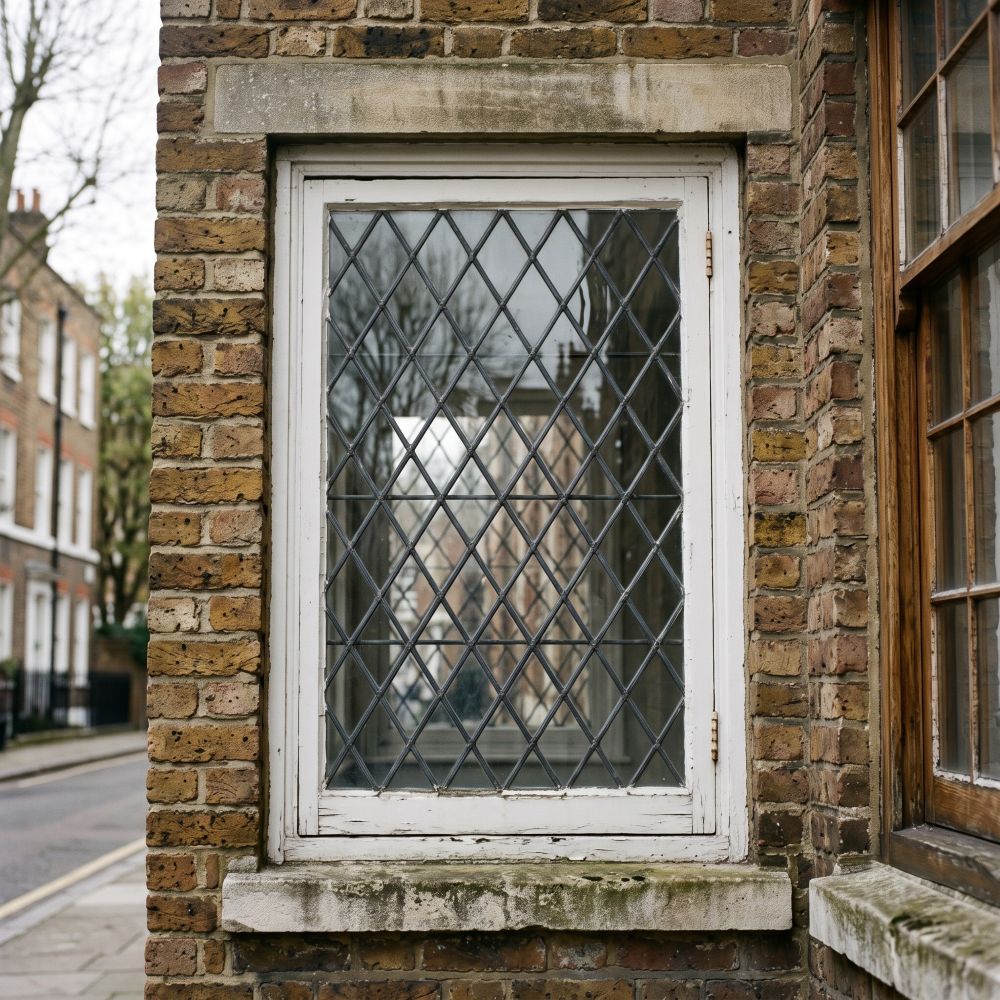
a traditional leaded light window on the brick façade of a Grade II listed townhouse in London

Cleaning Leaded Lights and Original Crown Glass in Grade II Listed London Homes

The first leaded light I ever damaged was in a ground-floor bay on Church Row in Hampstead, about nineteen years ago, and it took me four seconds. I put a 12-inch channel across a panel that had bowed maybe 15mm outwards over its life, leaned on it the way you lean on any pane, and heard the sound – a soft tick, like a knuckle – as a solder joint let go behind the glass. Nobody died. The client never noticed and the glazier charged £180. But I have thought about that four seconds on every listed job since, and it shapes everything below.

What Makes Crown Glass Different From the Pane Beside It?

Crown glass was spun. A gather of molten metal on the end of a pontil, opened out and flung round until centrifugal force threw it into a disc up to about 1.5 metres across, then cut into rectangles once cool. The disc has a bullseye in the middle where the rod was, faint concentric ripples running out from it, and a thickness that varies across a single small pane. It went out of general London use in the 1840s, superseded by cylinder glass, so anything still holding crown in a Bloomsbury or Spitalfields house has survived roughly a hundred and eighty years of sash cords, bombs, careless decorators and previous window cleaners.

It is also thin, and unevenly so. Often under 2mm at the outer edge of the disc, and soda-lime glass of that period is softer than anything made after the 1950s. Press a scraper against it at the wrong angle and it does not resist you the way modern float does.

Then there’s what age has done to the surface. Old glass weathers – alkali leaches out of the top few microns, the surface pits and takes on that faint iridescent bloom you see on very old panes, particularly on the weather face of a south elevation. That bloom is not dirt. It cannot be cleaned off, and anything aggressive enough to shift it is removing the glass itself.

Telling crown from cylinder from a 1990s replacement, standing on the path

Look along the pane at a raking angle with something straight behind it – a downpipe or the edge of a door frame. Crown puts a slow wobble into that line and the ripple curves. Cylinder glass distorts too, but the distortion runs in straight bands parallel with the way the cylinder was flattened. Modern float gives you a line that stays a line. On a five-panel Georgian sash in a listed terrace you’ll frequently find two originals and three replacements, and it matters, because the replacements are the only ones I’ll take a blade to.

Why Does Ordinary Glass Cleaner Wreck Lead Cames?

Lead is chemically sociable in a way most people don’t expect from a metal that sits on a roof for two centuries. It builds a stable grey-white patina of lead carbonate that protects everything underneath, and a good part of conserving a leaded light is leaving that patina where it is.

Acetic acid strips it. So the trick you read on forums – white vinegar and newspaper, wonderful on plain glass, cheap and effective – is close to the worst thing you can put on a leaded panel. It attacks the came directly, brightens it, and starts the corrosion cycle again from bare metal. Ammonia-based proprietary cleaners are barely better, and the strong alkaline traffic-film removers some firms carry in the van for uPVC will haze the surface of old glass and lift the cement bedding out of the came flanges.

Leave it.

What goes on the cloth, and what stays in the van

A few drops of a neutral non-ionic detergent in demineralised water, applied on a damp swab rather than a wet one, worked pane by pane and blotted off with lint-free cotton. Conservators use Synperonic A7 for this and it costs nothing to buy a litre. No scrim across the lead, because scrim catches on solder joints and copper ties and pulls them. No squeegee rubber running over a came at speed. On the internal face of a Highgate house off Pond Square I once spent two hours on eight panels of Victorian coloured margin lights, and two hours was the right amount of time for eight panels.

What Happens When You Put Pressure on a Bowed Panel?

Leaded lights fail in a predictable order. The cement or putty bedded between glass and lead perishes first, usually within sixty or seventy years, which lets each quarry rattle slightly in its came. Then the panel starts to bow under its own weight, because lead creeps – it deforms slowly and permanently under sustained load, and a panel taller than about 450mm without support will belly outwards over decades. Then the solder joints at the intersections take stresses they were never meant to carry, and one of them goes.

Every one of those stages is made worse by hand pressure. The squeegee is the obvious offender, but so is leaning a palm on the glass to steady yourself, and so is a water-fed pole brush pushed against a first-floor panel at fifteen litres an hour, which will drive water straight through perished cement into the room and onto the sill below. I have seen a Georgian window in Spitalfields with a tidemark on the internal shutter panelling caused entirely by a pole man doing his best.

Saddle bars, ferramenta and the copper ties nobody looks at

The bars spanning the back of a leaded light are the structure. Wrought or mild steel in most London domestic work, let into the timber or stone on either side, with copper wire ties soldered to the came at intervals and twisted round the bar. Those ties are what stops the belly becoming a collapse.

Check them before you touch the glass. If the bar is rusting it will be jacking outwards and putting the panel into tension, and if half the ties have snapped or been cut off by a decorator, the panel is only standing because it hasn’t been asked to do anything yet. You are the one asking it to do something that day. On a Fournier Street window with six broken ties I’ve cleaned the outside and declined the inside, and told the owner why in writing.

Does Grade II Status Change How the Job Gets Quoted?

Routine cleaning is maintenance. Nobody needs consent to wash a window. Repair or replacement of historic glazing in a listed building is a different animal altogether and can require listed building consent from the borough, so the practical rule is that the moment a job stops being cleaning and starts being fixing, it leaves my hands and goes to a conservation-accredited glazier and the conservation officer.

Who you ring when it stops being a cleaning job

The tell is movement. If a quarry rocks under light finger pressure, if there’s daylight visible along a came flange, if the panel has gone opaque with old cement dust between the glass and the lead, that is a repair conversation and not a cleaning one. Same for anything where the timber or stone surround has failed around the panel. I take photographs, send them to the owner, and give them the name of a leaded light specialist who works on listed fabric – and then I clean the windows that are sound and leave that one until it’s been dealt with. Borough conservation teams are generally easier to talk to than people expect, and they would far rather hear from somebody early.

Where it changes the quote is time and liability. A plain sash elevation might be four minutes a window. Eight leaded panels with original glass, hand-cleaned and blotted, is most of a morning, and the insurance position on breaking irreplaceable glass is not the same as the position on breaking a £60 double-glazed unit.

Here’s the opinion, and I’ll defend it: most firms quoting listed properties in London are pricing leaded lights at the plain-glass rate because they’ve never been shown the difference, and if you accept that price you are being quoted by somebody who intends to work fast. On Camberwell Grove I’ve followed three separate outfits who all left the same signature – bright shiny lead, streaked cement lines and a beautiful finish that will look ten years older by the next visit.

When Is Doing Almost Nothing the Right Answer?

Often. A leaded panel on a sheltered elevation needs dry dusting with a soft brush and a wet clean perhaps once a year, and there are windows in Forty Hill and out along the Enfield edge where I’ve talked owners down from quarterly to twice-yearly and the glass looks better for it. Every wet clean is a small mechanical event: water at the cement lines, cloth dragging against solder, and a ladder resting somewhere on the reveal while you do it. Twelve of them do more damage than the London air does.

Leave it alone through frost, too. Cement bedding that’s holding water will lift when it freezes and thaws, and washing a north-facing leaded light in February is asking for it.

The grey streaks running down onto the cill

One more thing that gets blamed on cleaners unfairly. Rainwater running off lead came picks up carbonate and carries it down the glass and onto the stone below, which is why you get those pale grey vertical tracks on a Portland cill under an old leaded window. Scrub the cill hard enough to shift them and you open the stone surface, which makes the next lot worse.

So: soft brush, plain water, accept about seventy per cent, come back in six months.

I’d rather write that than pretend I can make a 1790s window look like it came out of a factory in Peterborough last Tuesday. Some of the best-preserved glass in London has stayed that way because a succession of people decided not to touch it, and there is a version of this trade where the skill is knowing which windows those are. The bullseye in the bottom left pane on Church Row is still there, incidentally. Somebody in 1830 thought it was a defect worth using anyway.

Why Water-Fed Poles Struggle With Victorian Sash Windows in London Terraces (And When Traditional Cleaning Still Wins)

The water-fed pole is the best thing to happen to this trade since the rubber blade, and I own four of them – two carbon, two hybrid, a 650-litre tank in the Transit and a reverse osmosis unit that costs me more in membranes each year than my phone contract. So read what follows as a complaint from inside the tent. On a 1970s semi in Bexleyheath with uPVC casements, the pole wins on every measure that matters. On a four-storey stock brick terrace in Barnsbury with original box sashes, hundred-year-old linseed putty and a basement lightwell full of ferns, it loses more often than the industry likes to admit.

What Happens When Pure Water Meets 130-Year-Old Putty?

Pure water works because it is hungry. Strip out the calcium, magnesium and dissolved solids from Thames Water’s supply – which in most of north and west London runs somewhere around 300 to 380 ppm off the chalk boreholes – and you get a solvent that pulls contaminants off the glass and holds them in suspension until they run off the cill. Nothing left behind, nothing to dry into spots. On a sealed modern unit with a clean aluminium or plastic frame, that is close to magic.

Victorian putty is not a clean frame. It is whiting and linseed oil, laid in about 1888 and painted over maybe fourteen times since, by now partly perished into a chalky crumb sitting in the rebate around every pane. Hungry water finds it. The brush agitates it. And for the next twenty minutes, dissolved chalk and old oil residue tracks down the face of the glass in fine grey tears and dries there, because by then you have moved your ladderless self three houses along the road and the sun has come round onto the elevation.

There’s a second problem underneath the first. Pure water lifts what is loose and suspended; it does very little against anything chemically bonded to the surface, and old cylinder or early float glass in a city like this collects plenty of that – cement splash from someone’s repointing, or diesel film baked on through fifteen summers of the A501. That comes off with a 1-inch blade held flat and a bit of judgement about where the glass is too pitted to scrape. No brush head removes it, however many passes you make.

I have watched this happen on Thornhill Square more times than I care to write down. Customer comes out, looks up, sees streaking she didn’t have before, and reasonably concludes the man with the pole has made her windows worse. She isn’t wrong. She’s watching her own window frames wash themselves onto her glass.

The three-visit rule nobody mentions in the quote

Any honest pole operator will tell you that a neglected traditional terrace needs a settling-in period. The first clean lifts the loose contamination. The second gets what the first one loosened. By the third or fourth visit, on a four-to-six week cycle, the frames have stopped shedding and the glass finally comes up properly. That is a real phenomenon and I am not going to pretend it isn’t.

What I will say is that quoting a first clean at the standard rate and delivering a rinse is a bad piece of business. If the first pole clean on your terrace comes back streaky, you should not be paying full price for it. Fine.

Why Do Sash Horns and Glazing Bars Defeat a Brush Head?

A pole brush is a wide, soft-bristled tool with two jets behind it, designed to sweep a large uninterrupted plane. Victorian fenestration is the opposite of a large uninterrupted plane. A six-over-six sash gives you glazing bars 20mm wide with deep putty lines either side of them, a projecting meeting rail, and – on anything post-1870 – run-through horns hanging off the bottom of the upper sash like a pair of ears.

Bristles skate across all of that. They flick water into the rebate corners and out again without ever scrubbing the junction where the putty meets the glass, which is precisely the 3mm strip where London traffic film builds up thickest. You end up with a clean centre pane and a dirty grey perimeter on every single light. On a two-over-two that’s tolerable. On the eight-light bays along Cathnor Road in Brackenbury Village, you’re leaving forty-eight dirty margins on one elevation.

What a squeegee does in a rebate that a brush can’t

A traditional man puts an applicator into the corner with his thumb behind it, works the solution into the putty line, then pulls a 6-inch channel through the pane and detaches the last inch of water with a twisted scrim. The blade is a hard, straight edge with pressure behind it. A pole brush is a soft edge with no pressure at all beyond the weight of a wet bristle at twenty feet.

That’s it. That’s the whole mechanical argument, and no amount of fan jets or split brush heads gets round it.

Where Does All That Water End Up on a Timber Box Sash?

Here is the part that costs people money rather than looking bad. A box sash is a hollow frame – pulley stiles either side, weights hanging in the boxes, cords running over pulleys at the head. On a well-maintained window, that cavity stays dry. On a terrace where the paint has gone dull and the glazing bead has opened up, it does not.

Twenty-five litres of water an hour, delivered under pressure at the head of a window, will find every open joint in a sash frame. It goes past the pulley and into the box, where it sits on a cast-iron weight and stays put. I have pulled beads off windows in Walthamstow Village where the pocket piece was soft enough to press a thumb into, and the owners had never had anything worse than a pole operator visit fortnightly for six years. Whether that alone rotted the frame, I can’t say for certain. It didn’t help.

Traditional cleaning puts perhaps half a litre of warm solution on a whole window, controlled by hand, wiped off the cill before it travels. That difference matters most on the bottom rail and the cill nosing, where London rot always starts.

The lightwell problem on Telegraph Hill

South-east London terraces on Erlanger Road and around the Telegraph Hill slopes sit above open basement lightwells with railings at pavement level. Set your pole back far enough to clear the railings and your working angle to the second-floor sashes is now nearly vertical, so the run-off comes straight back down the pole onto your hands and the brush loses whatever contact pressure it had. Stand closer and you’re leaning over a 2.5-metre drop with a 12-metre pole. Neither is good. A traditional operator with a sectional ladder footed properly in the well solves it in ten minutes.

Does the London Terrace Itself Get in the Way?

Constantly. The pole needs three things – a place to stand, a sightline, and reach – and the London terrace was built with none of them in mind.

Front elevations give you a two-metre garden, a wheelie bin store, a hedge and a bay that projects a metre from the building line. Rear elevations give you a side return, an extension roof, and a fence you can’t get the hose over. Reach is the other one: a four-storey terrace with a lower ground floor puts the top sashes at fourteen or fifteen metres. Anything over about 45 feet of extended pole flexes badly enough that you are painting the glass with water rather than scrubbing it, and the heavier the head the worse it gets.

And the water itself is dearer here than the trade admits. Thames Water’s chalk supply comes out of the tap hard enough that a two-stage RO unit wastes three or four litres for every one it purifies, and the DI resin behind it exhausts fast on a full day of terraces. That cost lands somewhere, usually in a rushed clean rather than a higher price.

Then there’s the stone. Portland cills and moulded string courses. Rinse a top-floor sash and the water sheets down onto a filthy projecting cill, picks up sixty years of soot from the parapet and redeposits it on the sash below. You clean top-down, then the top-down rinse dirties what you just did.

Bays and the angle you cannot get

A canted bay has two side lights sitting at roughly 45 degrees to the front. From the pavement on Trevelyan Road in Tooting, you can see one of those cheeks and not the other. You cannot brush glass you cannot see. Operators know this and work by feel, which is why the return sides of bay windows are the first place I check when a customer says the last firm wasn’t quite right.

So When Should You Insist on the Pole Instead?

When the alternative is a man on a ladder against a Victorian cill that has never been load-tested. The Work at Height Regulations exist because ladders kill people, and a pole operator standing on the pavement is not going to fall off it.

Beyond safety: rear elevations with no ladder footing, converted flats where nobody can let you through, replacement uPVC sashes fitted in the 1990s where there’s no putty to leach and no timber to soak, conservatory roofs, and any building where the freeholder has banned ladders outright. Half of my Zone 2 portfolio is pole work for exactly these reasons and I wouldn’t change it.

Winter, and the bit where the pole loses outright

Below about minus two, a pole system is finished – the hose freezes solid and the film on the glass sets before it can run off. Traditional cleaning with a warm detergent solution carries on into a Hackney January without complaint. Those are the days when the old method is the only one that leaves the van.

The rest of the time I’d put it plainly: if your terrace has original timber sashes with soft putty and a bay at the front, ask for traditional on the front elevation and pole on the rear. Some firms will refuse to split it because it means two sets of kit on one job. Fine. Ring somebody who will. On a stock brick terrace with the original glass still in, the difference shows up in the corners, and the corners are the bit you look at from your own sofa.

Why Reach & Wash Still Reigns Supreme After 25 Years

There’s a reason you still see window cleaners across the UK wheeling out telescopic poles and barrels of pure water. It’s not nostalgia. It’s not stubbornness. It’s because, even after all the high-tech options thrown at the industry over the past two decades, nothing beats the Reach & Wash system. It was launched back in 1998, and a full quarter-century later, it’s still king of the trade.

So, why is that? Why hasn’t it been replaced or improved upon? Because it works. Simple as that. It’s effective, affordable, safe, and sustainable – a rare combo in any trade. You don’t need an engineering degree to understand it, you don’t have to splash out on expensive cleaning chemicals, and you don’t need to climb a ladder four storeys high to get sparkling results. Window cleaners know what they’re doing, and they keep choosing Reach & Wash for a reason.

Think of it like this. If a car from 1998 could still compete with modern models on fuel economy, safety, and reliability, we’d all be queuing up to buy one. Reach & Wash is the Ford Focus of window cleaning. Built for purpose, trusted by professionals, and still turning heads all these years later.

Let’s break down what’s kept it at the top for 25 years – and why it’s likely to stay there for 25 more.


Simple Always Wins: Why Overcomplicating Cleaning Just Doesn’t Work

There’s a strange habit in the cleaning world – trying to reinvent the wheel. Over the years, we’ve seen fancy robotic window cleaners, drones with microfibre pads, and even water-repellent sprays that promise to keep windows clean forever. Most of them disappear faster than they arrive.

Meanwhile, Reach & Wash just gets on with the job.

At its heart, the system is simple. You’ve got a telescopic pole, a soft brush, and a stream of purified water. That’s it. No motors, no electronics, no need to dismantle anything. You turn it on, scrub the window, rinse it off, and walk away. The water dries without leaving streaks, because it’s been filtered of all impurities – no spots, no smears.

And you know what? Clients love it. They don’t care how ‘innovative’ your kit is. They want clean windows. Reliable cleaners. Reasonable prices. That’s what Reach & Wash delivers, and it does so without fuss.

The best part? Any professional can pick it up and use it in minutes. Training someone new doesn’t take weeks. You don’t need a manual the size of a phone book. You don’t even need a ladder. That sort of ease is worth its weight in gold.


Trusted By The Pros: Why Window Cleaners Still Swear By It

Speak to ten experienced window cleaners, and at least eight will say the same thing – Reach & Wash is still their number one tool. That says a lot, especially when so many trades are shifting to newer, flashier tech.

It’s not just about results, though those are consistently excellent. It’s also about how well it fits the day-to-day needs of real workers. Cleaners need to move fast, carry minimal gear, avoid risky climbs, and handle a variety of buildings. Whether it’s a tiny café front or a six-storey block of flats, Reach & Wash adapts easily.

There’s a reason it’s become the gold standard. Some pros have used the same system for over a decade, just replacing parts as needed. The build quality holds up, and there’s a solid support network for maintenance and upgrades. You’re not left chasing down obscure parts from companies that folded five years ago.

And let’s be honest – it’s not often you get a piece of kit that earns genuine loyalty. But go to any window cleaning forum, Facebook group or trade event, and you’ll hear it again and again. “I’ve tried others, but I always come back to Reach & Wash.”


The Green Cleaner’s Dream: Water Only, No Chemicals

One of the unsung heroes in the eco-cleaning movement? Reach & Wash. It was ahead of its time without even trying. Back in the late ‘90s, nobody was talking about zero-chemical cleaning. But this system nailed it from day one.

It doesn’t rely on detergents. There are no harsh chemicals. You’re not sending anything harmful down the drains. It uses nothing but pure, filtered water. That means it’s gentle on plants, animals, and the environment. You won’t upset local councils with runoff issues, and you won’t damage paintwork or seals with aggressive solutions.

It’s become a favourite for green-minded businesses and schools. Clients who want eco-friendly services look for cleaners who use Reach & Wash. It’s a quiet selling point, but it works.

Plus, you can point out that there’s no plastic waste from bottles or buckets of detergent. No transport emissions from chemical deliveries. Just water, straight from your own supply, filtered and used on-site.

In a world that’s trying (and sometimes struggling) to go green, this system just ticks all the boxes without breaking a sweat.


No More Price Shock: Stability In A Shaky Economy

Let’s talk money. The cleaning trade isn’t immune to price swings – just look at what’s happened with petrol, electricity, and cleaning supplies in recent years. One month a bottle of detergent costs £5, the next it’s £9. That’s hard to absorb when your rates are already tight.

Reach & Wash sidesteps all that. There’s no detergent bill. Once you’ve got your filtration system set up, you’re just paying for water – and even that’s filtered and stored in bulk. It makes pricing far more predictable.

That’s a huge win for solo cleaners and small firms. You can offer stable prices to clients, without getting caught out by supply chain issues or inflation spikes. Your costs stay steady, and so does your income. No awkward price-rise conversations. No sudden cuts to your margin.

And if you’re bidding for commercial contracts, it gives you a serious edge. You’re not going to be undercut by someone who suddenly slashes their product costs. Your gear isn’t reliant on niche brands or short-shelf-life stock. It’s the same clean, every time.

You’d be amazed how much peace of mind that brings – both for the cleaner and the client.


Safety First: Keeping Cleaners And Clients Out Of Danger

Ladders. Love them or hate them, they’re still one of the most common causes of workplace injuries in the UK. And not just falls – we’re talking strains, knocks, window cracks, tile damage, even broken flower pots. Every cleaner’s had a near-miss. Some have had much worse.

Reach & Wash takes that danger out of the picture. You keep your feet firmly on the ground. No scrambling up shaky ladders. No leaning out of windows. No balancing acts on uneven driveways.

It’s not just safer for cleaners. It’s safer for the buildings, too. Older windows, delicate frames, sensitive seals – they all stay untouched by boots, ladders, or clumsy scrubbing. The brush is soft. The pressure is gentle. The water does most of the work.

Insurance companies love it. Property managers breathe easier. And cleaners go home without a sore back or a twisted ankle. That’s not just convenience – that’s serious long-term value.

Some councils and housing associations now require Reach & Wash or equivalent systems for work over a certain height. Not just to follow health and safety rules, but because it simply makes more sense.


Why It’s Not Going Anywhere Soon

If you’re expecting a shiny new system to knock Reach & Wash off its throne any time soon, don’t hold your breath. The truth is, it’s still the best blend of performance, cost, safety, and sustainability on the market.

It hasn’t lasted this long by accident. It’s lasted because it works. It keeps clients happy, keeps cleaners safe, and keeps the environment cleaner too.

Sure, some might be tempted by flashy new tech, but when the brush hits the glass, reliability always wins. That’s why you’ll still see those telescopic poles rising above the streets of London, Manchester, Cardiff, and everywhere in between. And that’s why, 25 years on, Reach & Wash isn’t just surviving – it’s still leading the way.

So next time you spot a cleaner calmly scrubbing a fifth-floor window from the pavement, you’ll know exactly what’s keeping them up there: not magic, not marketing – just a system that’s stood the test of time.

How to Clean and Maintain Office Windows in London’s Urban Environment

Clean office windows do more than improve the view; they help boost your productivity and reflect your company’s image. However, keeping the windows spotless in busy urban areas like London can be challenging, given the pollution and unpredictable weather.

We will discuss the benefits of having clean windows, share effective cleaning techniques, and offer essential maintenance tips to keep your office shining. We will also guide you in choosing the right professional service for your needs.

Factors Affecting Window Maintenance in Urban Environments

The Importance of Clean Office Windows

Clean office windows are essential in urban environments like London. They enhance the visual appeal of your commercial property and play a significant role in employee productivity and your overall business image.

When your windows are dirty, it can severely affect the professional appearance of your office, lower employee morale, and even cause visibility problems. That’s why regular window maintenance is essential to keeping your office in top condition.

Benefits for Productivity and Image

Keeping your office windows clean isn’t just about looking good; it significantly impacts employee productivity and business image. When those windows are free of grime and dirt, natural light floods the workspace, which can really boost everyone’s mood and work performance.

Research shows that a tidy and organised environment can help lower stress levels, allowing you and your employees to focus on tasks without the distractions of clutter. Studies indicate that a clean space can heighten focus and efficiency, improving productivity metrics like project completion rates and overall output.

Moreover, spotless windows not only enhance the view for your team but also create a polished appearance for clients and customers, helping to build a positive perception of your business. That pristine first impression can improve customer satisfaction, encouraging loyalty and repeat visits.

Best Practices for Cleaning Office Windows

Factors Affecting Window Maintenance in Urban Environments

In urban environments, many factors, such as pollution, weather conditions, and even local building regulations, impact window maintenance.

For example, the dirt and grime from traffic and construction can quickly accumulate on your windows if you live in a busy area. Clean them more frequently to maintain that streak-free shine and preserve the clarity of the glass.

Pollution, Weather, and Other Challenges

Pollution and unpredictable weather are some of the biggest headaches when cleaning office windows in urban areas. If you don’t use the proper techniques, all that dirt, grime, and weather change can lead to streaks and visibility problems.

You’ll notice that pollutants like soot and industrial debris not only mean you need to clean more often but can also reduce the lifespan of your windows. Rain can leave water spots and extra dirt, so timing your cleaning schedule on stormy days becomes crucial.

On the flip side, sunny days can be tricky, too; cleaning solutions might dry too quickly, leading to those pesky streaks unless you use eco-friendly cleaners designed for rapid evaporation.

Therefore, using the proper methods and products for specific weather conditions is critical to keeping your windows clear and giving off that professional vibe in the workplace.

Best Practices for Cleaning Office Windows

Implementing best practices for cleaning your office windows is critical to achieving a streak-free finish and extending the life of your windows. When you use the proper cleaning equipment and environmentally friendly cleaning solutions, you’ll notice a significant difference in the effectiveness of your cleaning efforts.

This way, your glass surfaces will remain clear and look great!

Tools and Techniques for Effective Cleaning

Using the right tools and techniques is key to effective window cleaning, especially if you aim for a streak-free finish. Essential tools like squeegees, microfibre cloths, and advanced cleaning equipment boost your cleaning game, giving you a clear view through your windows.

When you incorporate specialised cleaning tools designed for different window types, you’ll notice a massive difference in your results. For example, using a water-fed pole system allows you to easily reach high or tricky spots without needing a ladder, which keeps you safer and ensures you get every bit of glass sparkling clean.

Moreover, innovations like eco-friendly cleaning work wonders and help you do your bit for the environment. Understanding various cleaning techniques, like the three-step method for large panes or the circular motion technique for smaller windows, can further customise your approach. This way, you’ll end up with cleaner surfaces and windows that last longer.

Regular Maintenance Tips

Establishing a regular maintenance schedule for your office windows is crucial to keep them looking great and lasting longer. The frequency of cleaning can change depending on factors such as your location and the weather, but the critical part is consistently inspecting and maintaining them.

This approach will help you prevent that annoying buildup of dirt and grime.

Scheduling and Frequency Recommendations

When figuring out how often to schedule window cleaning, consider a few things, such as how accessible your windows are and what your property needs explicitly. Regular, seasonal maintenance helps reduce dirt build-up and the effects of environmental pollutants so that you can enjoy a clear view all year round.

To set up an effective cleaning schedule, you must assess the unique demands of your office environment. Consider factors such as foot traffic, nearby construction, and local weather patterns. For example, if your office is buzzing with activity, you might need to clean those windows more frequently, which could increase your operational costs.

Speaking with professional service providers about cleaning contracts might also be a good idea. These contracts often come with predictable expenses and guarantee consistent service quality. Additionally, a regular cleaning schedule can boost workplace morale and productivity by maintaining a clean, professional atmosphere that makes a great impression on visitors and staff.

Choosing a Professional Window Cleaning Service

Choosing a professional window cleaning service is a big decision that affects how clean and appealing your office looks. You will want to consider a few key factors, such as the quality of their service, safety procedures, and what other customers say in their reviews.

This way, you will be able to select a reputable provider that fits your specific needs perfectly.

Factors to Consider and Questions to Ask

When you’re looking for a professional window cleaning service, you should keep a few things in mind to ensure you receive quality service that meets your needs. Asking the right questions can provide valuable insights into the company’s expertise, the effectiveness of its cleaning solutions, and its commitment to health and safety standards.

Start by learning about their experience with different types of windows, as that can significantly impact their cleaning techniques and the overall results you can expect. You’ll also want to understand what specific cleaning products and tools they utilise so you can assess their environmental impact and safety for your property and the surrounding area (not mentioning Reach & Wash in their presentation should be an instant red flag).

Don’t forget to confirm that they adhere to local health and safety regulations. This is a good indicator of their professionalism and reliability. Keeping these factors in mind enhances the quality of service you can anticipate and fosters customer loyalty, as you’ll appreciate providers who prioritise safety and employ effective methods tailored to your specific situation.

How To Clean Roof Solar Panels With Reach Wash

Are you making the most of your solar panels? You need to keep them clean to get the best performance out of them.

Let’s examine why cleaning your solar panels is so important and compare the Reach & Wash technique to traditional methods. Find out how efficient and effective Reach & Wash is for cleaning solar panels, and get a step-by-step guide on how to use this method. I’ll share some valuable tips on keeping your solar panels clean to ensure they last longer and work more efficiently.

Roof solar panel cleaning with Reach & Wash

The Importance of Cleaning Solar Panels

You need to keep those solar panels on your roof squeaky clean to get the most out of them. Regularly cleaning your solar panels is critical to ensuring they work at their best and last a long time. It’s all part of taking care of your home and keeping things spick and span.

Why Regular Cleaning is Necessary

You need to keep those solar panels clean to get rid of all the dust, dirt, and grime that builds up on them over time, messing with their performance. Grab a brushsoapy water, and a squeegee to scrub away those hard water stains and keep those panels in tip-top shape.

Between the dust, dirt, and constant sunlight, your solar panels can get gunked up, making it hard for them to soak up that sunshine and turn it into energy efficiently. If you don’t clean them regularly, that grime buildup could mean less power output and a shorter lifespan for your panels.

Remember, safety first when climbing up ladders to reach those panels and using your cleaning gear. You don’t want any accidents or damage. Dealing with tough stains and stubborn dirt might require some elbow grease, but it’s worth it to ensure your panels perform at their best.

Methods for Cleaning Solar Panels

You have a few options for cleaning your solar panels. You can do it yourself with essential tools and cleaning products, or you can hire a professional to do the dirty work for you. Just make sure to pick the method that fits your maintenance routine and preferences to get the best results.

Comparing Traditional vs. Reach & Wash Methods

When you compare traditional cleaning methods to modern Reach & Wash systems, you’ll see that the latter offers greater efficiency and effectiveness in getting rid of dirt. The Reach & Wash systems use water-fed poles and high-tech surface treatments to give you a deep clean and keep your solar panels looking top-notch.

Reach & Wash techniques use water-fed poles and extension poles to kick ladders and scaffolding to the kerb, ensuring that your cleaning process is safer and more efficient. These poles are designed to reach even the trickiest spots, giving you a thorough cleaning experience.

The advanced surface treatments wipe away grime and debris and leave a protective layer behind, boosting the panels’ efficiency and helping them last longer. This means you get more than just a clean surface – your solar panels will operate at their peak energy production levels.

What is Reach & Wash?

Using the Reach & Wash method is key to solar panel maintenance. This specialised cleaning technique lets you keep your panels in top condition without risking damage. By monitoring how often you clean them and addressing issues like algae growth, Reach & Wash helps protect your panels from the elements and ensures they soak up as much sunlight as possible for optimal energy production.

This method provides a safe and efficient way to clean your solar panels and plays a crucial role in prolonging their lifespan and enhancing their performance. Regularly cleaning with Reach & Wash is all about maintaining your panels’ efficiency by allowing them to absorb as much sunlight as possible. Proper maintenance is essential for maximising the energy output of your solar system, so remember to prioritise cleanliness and preventative care.

Benefits of Reach & Wash for Solar Panel Cleaning

You get many perks when you use Reach & Wash for solar panel cleaning. You’ll apply protective coatings, receive detailed care instructions, and pick up some handy cleaning tips. Using distilled water and a microfibre cloth ensures your panels get an excellent, gentle cleaning that keeps them in tip-top condition.

Efficiency and Effectiveness

One of the critical advantages of Reach & Wash for solar panel cleaning is its efficiency and effectiveness in enhancing productivity and maintaining optimal solar panel performance. This method offers a reliable cleaning solution that ensures thorough dirt removal and promotes overall efficiency in energy production.

Regular cleaning using Reach & Wash keeps your solar panels looking their best and plays a crucial role in maximising their energy output. This method effectively removes dust, debris, and pollutants, helping your panels operate at peak efficiency. This, in turn, leads to enhanced energy savings and a longer lifespan for your panels.

Consistent maintenance with Reach & Wash is essential to ensure that your solar panels generate clean, sustainable energy efficiently for years.

How to Use Reach & Wash for Solar Panel Cleaning

When using Reach & Wash for solar panel cleaning, make sure you’ve got your ladder safety down pat and are using effective cleaning techniques to get the job done efficiently and keep things squeaky clean. It’s important to stick to those best practices for home maintenance, like giving your panels a regular cleaning, to ensure they’re working at their best and keep performing well in the long run.

Step-by-Step Guide

  1. If you want to master Reach & Wash to clean your solar panels, here’s a step-by-step guide.
  2. Start by preparing the cleaning solution.
  3. Scrub the panels to get rid of dirt.
  4. Remember to rinse with distilled water to prevent water spots, and clean them thoroughly to tackle those common challenges.
  5. These steps will give you a streak-free finish and keep your solar panels looking top-notch.
  6. When using Reach & Wash to clean your solar panels, apply the cleaning solution generously to the brush head before attaching it to the water-fed pole.
  7. Next, gently scrub the panels horizontally and vertically to loosen any stubborn grime.
  8. To avoid those pesky water spots, it’s essential to rinse the panels thoroughly with distilled water.
  9. For a genuinely spotless shine, please give them a final rinse with purified water to get rid of any last bits of residue.
  10. This will leave your panels sparkling clean and working to maximise energy efficiency.

Tips for Maintaining Clean Solar Panels

When taking care of your solar panels, use eco-friendly practices to keep them sustainable and performing at their best. Setting up a regular maintenance routine to tackle dirt buildup and stop algae from creeping in is critical to keeping your solar panels clean and ensuring they keep working smoothly for the long haul.

Preventative Measures and Maintenance Schedule

Regarding keeping your solar panels spick and span, there are a few things to keep in mind. Think about how rainwater flows off your panels to prevent streaks and don’t be afraid to ask the pros for advice on the best cleaning techniques. Setting up a maintenance routine that includes regular check-ups and bringing in professional cleaners can go a long way in preserving your panels and keeping them in tip-top shape.

You’ll want to use specialised tools like soft brushes or squeegees for a gentle touch during cleaning. This will help avoid scratches and ensure your panels stay strong over time. And whatever you do, steer clear of rough materials or harsh chemicals that could harm the panel’s surface. Keeping an eye on your panels for any pesky debris or signs of damage is critical to catching issues early.

If you want to take things up a notch, consider getting personalised cleaning tips from a professional. They can give you recommendations tailored to your specific panel type, boosting the efficiency and longevity of your solar energy system.

Five Reasons Why Reach Wash Is The Best Window Cleaning Method

Are you tired of traditional window cleaning methods that leave streaks and require dangerous ladders? Unless you’ve lived under a rock for the past fifteen years, I have no idea why you haven’t switched to using optic poles for window washing.

In this article, we will explore how Reach & Wash works, its numerous benefits, and its limitations. We will also discuss how to choose a reliable Reach & Wash service provider and discover why it is considered the best window cleaning method available today.

What Is Reach & Wash Window Cleaning Method?

Reach & Wash is considered one of the best window cleaning methods, utilising purified water as the cleaning solution. This innovative technique ensures the cleaning process’s safetyefficiency, and eco-friendliness.

By eliminating the need for chemical detergents, Reach & Wash provides streak-free results and contributes to a healthier indoor environment. The reliance on purified water enhances the cleaning effectiveness by effectively absorbing dirt and grime without leaving residue. Professional-grade equipment in this method thoroughly cleans hard-to-reach windows, leaving them sparkling and spotless. Its eco-friendly nature further sets it apart, making it an environmentally conscious choice for residential and commercial window cleaning needs.

How Does Reach & Wash Work?

Reach & Wash operates on the principle of using pure water technology to achieve streak-free and clear windows. This method is advantageous for reaching tall buildings, overcoming height restrictions, and ensuring minimal disruption for residential and commercial properties.

The Reach & Wash system allows operators to clean windows up to several storeys high from the ground level by utilising specially designed telescopic poles fitted with soft bristle brushes. The pure water is pumped through the poles and onto the window surface, loosening dirt and grime without additional cleaning agents. As the pure water dries without leaving mineral deposits, it leaves behind immaculately clean, streak-free windows, enhancing the property’s overall appearance.

What Are The Benefits Of Reach & Wash?

Reach & Wash offers many advantages from its innovative approach, including high-quality resultseffective maintenance, and transparent windows. This system provides conveniencespeed, and improved cleaning outcomes.

Increased Safety

One of Reach & Wash’s primary benefits is its heightened safety measures, making it an eco-friendly and reliable choice for window cleaning. This method’s outstanding performance is attributed to advanced technology and adherence to high standards.

By prioritising safety, Reach & Wash protects the environment and workers in the cleaning operations. Eco-friendly practices minimise the use of harsh chemicals, reducing their environmental impact. The reliability of this method stems from its consistent results and proven track record in delivering quality service. Through cutting-edge technology, Reach & Wash has set a benchmark for safety and efficiency in the cleaning industry. Because the technicians work from the ground and don’t have to employ ladders, the risks of accidents are almost non-existant (check our roof solar panels cleaning guide for a good illustratrion of the point.)

No Chemicals Used

An essential feature of Reach & Wash is the absence of chemicals in its cleaning process, promoting purity and environmental consciousness. This chemical-free approach not only ensures affordability but also delivers long-lasting cleaning results.

Reach & Wash minimises its environmental impact by utilising only water and cutting-edge technology, making it a sustainable and eco-friendly choice for clients. The commitment to chemical-free cleaning benefits the planet and enhances the safety of the cleaning professionals and the inhabitants of the cleaned spaces. Clients can enjoy pristine results without worrying about harmful residues, aligning with Reach & Wash’s mission of providing effective and environmentally responsible cleaning solutions.

Environmentally Friendly

Reach & Wash stands out for its environmentally friendly practices, showcasing a practical and reliable solution for window cleaning needs. This method’s eco-friendly approach is further reinforced by its status as a trusted brand offering expert service.

With a commitment to sustainability, Reach & Wash ensures spotless, streak-free windows and minimises environmental impact. This cleaning method avoids harsh chemicals and significantly reduces waste production by utilising purified water and cutting-edge technology. Customers appreciate the peace of mind of choosing a service that aligns with their eco-conscious values. The brand’s dedication to eco-friendly initiatives has positioned it as a leader in the industry, setting a high standard for environmentally responsible cleaning practices.

Saves Time and Money

One of Reach & Wash’s key advantages is its ability to save time and money through its time-savingcost-effective approach. This method ensures efficiencyaffordability, and customer satisfaction.

By utilising the Reach & Wash system, clients can benefit from reduced labour costs and lower water consumption, resulting in a more eco-friendly cleaning solution. The streamlined process allows for faster task completion, enabling cleaning crews to cover more ground in less time. Ultimately, this saves on operational expenses and increases productivity, making it an attractive choice for businesses looking to optimise their cleaning routines without compromising quality.

Provides A Better Clean

Reach & Wash excels in providing superior cleanliness, ensuring clear windows, improved results, and high-quality maintenance. This system offers top-notch performance and exceptional quality, delivering reliable cleaning outcomes.

Using Reach & Wash over traditional cleaning methods means effortlessly achieving pristine cleaning standards. The innovative technology behind this system allows for thorough and efficient window cleaning, leaving no streaks or residues behind. Its effectiveness in removing dirt and grime from windows sets it apart, resulting in a spotless finish each time. With Reach & Wash, clients can enjoy crystal-clear windows and long-lasting cleanliness that enhances the overall aesthetic of their properties.

What Are The Limitations Of Reach & Wash?

While Reach & Wash offers numerous advantages, it also has limitations that should be considered. This method may not be suitable for all types of windows, requires specialised equipment, and could be less effective in removing stubborn stains.

Due to the potential risks involved, some window types, such as those with intricate designs or delicate materials, may not be ideal candidates for Reach & Wash. The specialised equipment needed for this method, like water-fed poles and filtration systems, can be costly to acquire and maintain. When faced with stubborn stains like hard water deposits or bird droppings, Reach & Wash may struggle to eliminate them, necessitating additional techniques or solutions to achieve desired results.

Not Suitable For All Types Of Windows

One of the limitations of Reach & Wash is its unsuitability for certain types of windows, which may pose practical challenges. This method is affordable and industry-leading but may not deliver unmatched results for every window configuration.

For instance, intricately designed windows with delicate frames or historical stained glass windows may require specialised cleaning techniques that Reach & Wash may not be able to provide. In such cases, traditional hand cleaning methods or hiring professional window cleaners with expertise in these specific window types might yield better results, albeit at a potentially higher cost.

It’s essential to assess the unique characteristics of the windows in question before deciding on the most suitable cleaning approach to ensure both effectiveness and cost-effectiveness.

Requires Specialised Equipment

Reach & Wash requires specialised equipment, which can be both an advantage and a limitation. While this equipment enhances cleaning efficiency and represents a modern approach, it also requires adhering to this trusted method.

The critical specialised equipment in Reach & Wash systems includes water-fed poles, pure water filtration units, and pumps. Water-fed poles enable technicians to reach high windows and facades without ladders, ensuring safety and thorough cleaning. The pure water filtration units ensure no residue or streaks are left behind, providing a spotless finish.

Although the initial investment in this equipment can be a limitation for some users, the reliability and trustworthiness associated with Reach & Wash methods make it a preferred choice for many professional cleaning companies.

May Not Be As Effective In Removing Stubborn Stains

Despite its effectiveness, Reach & Wash may struggle to remove stubborn stains due to its nature. While this method excels in routine maintenance and cleaning tasks, it may only sometimes deliver unbeatable results when tackling deeply ingrained stains.

The primary challenge faced by Reach & Wash in eradicating stubborn stains lies in its inability to penetrate deep into the fibres or pores of surfaces. It works wonders on dirt and grime, but deeply ingrained stains require more targeted removal techniques. This limitation is often encountered when stains have been left untreated for an extended period or when dealing with particularly tough substances. Specialised treatments and manual intervention may be necessary to achieve satisfactory results.

How To Choose A Reliable Reach & Wash Service Provider?

Selecting a reliable Reach & Wash service provider requires careful consideration of various factors such as certification, insurance, customer reviews, equipment quality, and safety measures. Ensuring these aspects can assist in selecting a trustworthy provider for your window cleaning requirements.

Certification is a vital indicator of a service provider’s expertise and adherence to industry standards, instilling confidence in their capabilities.

Insurance cover is crucial to safeguard both the client and the company in the event of any unforeseen incidents during the cleaning process.

Positive customer feedback provides valuable insights into the quality of service and demonstrates the provider’s history of client satisfaction.

High-quality equipment guarantees efficient cleaning and demonstrates the provider’s dedication to delivering outstanding results.

Rigorous safety procedures reassure clients of a professional and safe window cleaning experience.

Check for proper certification and insurance

When selecting a Reach & Wash service provider, checking for proper certification and insurance is crucial to ensure a reputable and expert service. These credentials signify the provider’s commitment to delivering innovative solutions whilst maintaining high service standards.

Certification is a testament to the provider’s expertise in utilising advanced cleaning techniques and equipment for optimal results. It also indicates that the service provider has undergone training and met industry standards.

On the other hand, insurance coverage offers protection in case of unforeseen incidents during the cleaning process, demonstrating the provider’s responsibility towards their employees and clients.

By verifying these essential credentials, clients can have peace of mind knowing that they are entrusting their cleaning needs to a reliable and professional service provider.

Inquire About Their Equipment And Techniques

Understanding the equipment and techniques a Reach & Wash service provider utilises is essential in evaluating their offerings. Enquire about their tools, methodologies, and cleaning approaches to ensure you receive top-notch service at an unbeatable price point.

By familiarising yourself with the tools and methods employed by these service providers, you can gain insights into the expertise and thoroughness they bring to their cleaning tasks. It’s crucial to investigate the technology utilised, such as the quality of water purification systems, the efficiency of telescopic poles, and the effectiveness of the cleaning solutions. This knowledge empowers you to make informed decisions and ensures that the cleaning service you choose delivers durable, efficient, and cost-effective solutions for your needs.

Compare Prices And Services Offered

Comparing the prices and services offered by different Reach & Wash providers is crucial in choosing the correct service partner. Look for providers offering competitive pricesguaranteed satisfaction, and upholding a trusted brand to prioritise customer contentment.

Evaluation of pricing structures can ensure fair rates for the services provided. It’s also essential to assess the level of customer satisfaction guarantees, as this can indicate the provider’s commitment to delivering quality service. Look for reviews and testimonials from previous clients to understand the provider’s reputation.

Opting for a Reach & Wash provider with a solid track record of customer satisfaction and service quality will likely result in a positive experience for your cleaning needs.

Ask About Their Safety Measures

Prioritising safety measures when engaging a Reach & Wash service provider is essential for ensuring a secure and effective cleaning operation. Enquire about their safety protocols, commitment to innovative solutions, and deployment of expert technicians to maintain high service standards.

By selecting a provider that places a strong emphasis on safety, clients can have peace of mind knowing that their property and surrounding areas are in good hands. Look for companies that incorporate cutting-edge safety technologies and procedures into their operations, demonstrating a dedication to protecting their employees and the environment. Skilled technicians well-versed in best safety practices are crucial in delivering top-notch service while maintaining a secure work environment.

Prioritising safety ensures the job is done efficiently and upholds the service provider’s integrity and reputation.

Frequently Asked Questions

What is the Reach & Wash method for window cleaning?

The Reach & Wash method uses purified water and a long telescopic pole to reach and clean high or hard-to-reach windows without ladders or scaffolding.

How does Reach & Wash differ from traditional window cleaning methods?

Unlike traditional methods that use chemicals and squeegees, Reach & Wash uses only purified water, which is environmentally friendly and leaves no residue or streaks on the windows.

What makes Reach & Wash the best window cleaning method?

There are five main reasons why Reach & Wash is considered the best window cleaning method: it is safe, efficient, eco-friendly, cost-effective, and provides a superior cleaning result without the use of chemicals.

Is Reach & Wash suitable for all types of windows?

Yes, Reach & Wash can be used on all types of windows, including glass, metal, and plastic. The telescopic pole allows the water to reach windows up to 80 feet high, making it the perfect method for cleaning even the most difficult-to-reach windows.

How does purified water help with window cleaning?

Purified water is free from minerals and impurities that can cause streaks and spots on windows. It also has a strong cleaning power that can effectively remove dirt, grime, and stains from windows without chemical cleaners.

Can Reach & Wash be used for commercial and residential window cleaning?

Reach & Wash is suitable for commercial and residential window cleaning. Its efficiency and cost-effectiveness make it a popular choice for businesses and homeowners. It can also be used for other surfaces, such as solar panels, signs, and facades.

Why I Use Reach & Wash Even On Ground-level Windows

If you ask professional cleaners why they love the Reach & Wash equipment (regardless of the brand), the first reason will be ease of access. I am not here to dispute that – I was lucky enough to enter the window cleaning industry when using the optic poles was already the norm. But I have heard countless stories from older colleagues about what the job used to be. Frankly speaking – I cannot imagine myself doing it.

While ease of access and safety should be on top of every list, praising the advantages of this innovative method, they somewhat diminish the importance of its cleaning efficiency. Reach & Wash delivers better cleaning results than any manual squeegee polish – and nobody can convince me to the contrary. Furthermore, working with the poles is incomparably faster when it comes to larger glass surfaces, like commercial window displays, store fronts, or business building facades.

So why wouldn’t you use Reach & Wash on ground-floor windows, even if you can clean them by hand? I do not have a logical answer to that question. My best guess is prejudice – I know cleaners who simply refuse to accept the self-evident truth that a mechanical device can deliver better results than human effort. In their mind, this somehow diminishes the profession, which is ludicrous. With all due respect, we are talking about cleaning windows, not sculpture or creative writing.

There are, of course, smaller and circular windows that do require manual cleaning. Apart from them, I now employ my water-fed pole to any glass surface I see. Call me too liberal or modern – I will still do my job twice faster than you, squeegee lovers!